Run your business · Workflow recipes
Workflow recipes
Review outstanding invoices and prepare follow-up
Review an overdue advisory invoice, customer context and payment evidence before preparing a reminder.
Updated September 19, 2026 3 min read
An invoice remains open and the account owner needs to know whether to follow up, wait for a promised payment or resolve a dispute. Review the evidence before preparing the next message.
What you combine
Try invoice preparation first
If you want to see how an invoice is created before reviewing collections, open SuperDebate Invoicing. Choose Use sample invoice, inspect the customer and line items, then select Prepare invoice. Use Request draft approval and Approve & create draft to create the fictional draft. Follow with Request sending approval and Approve & send invoice, then inspect the recorded result. These demo actions are simulated; the Stripe invoicing guide explains setup for a connected workspace.
Before you start
Use an authorized workspace with Collections and Stripe invoicing enabled, a configured Stripe connection and a customer-linked invoice observation. Confirm the source is current before deciding how to follow up. A real reminder also needs a working sender and the required approval.
Explore the professional services workspace with fictional records. Use it to inspect the shared screens and simulated actions; configure real forms or provider connections in a workspace you control.
Work through this example
A fictional Ledgerstone customer has an overdue invoice and says the payment is being processed. The finance owner needs to decide whether a reminder is appropriate.
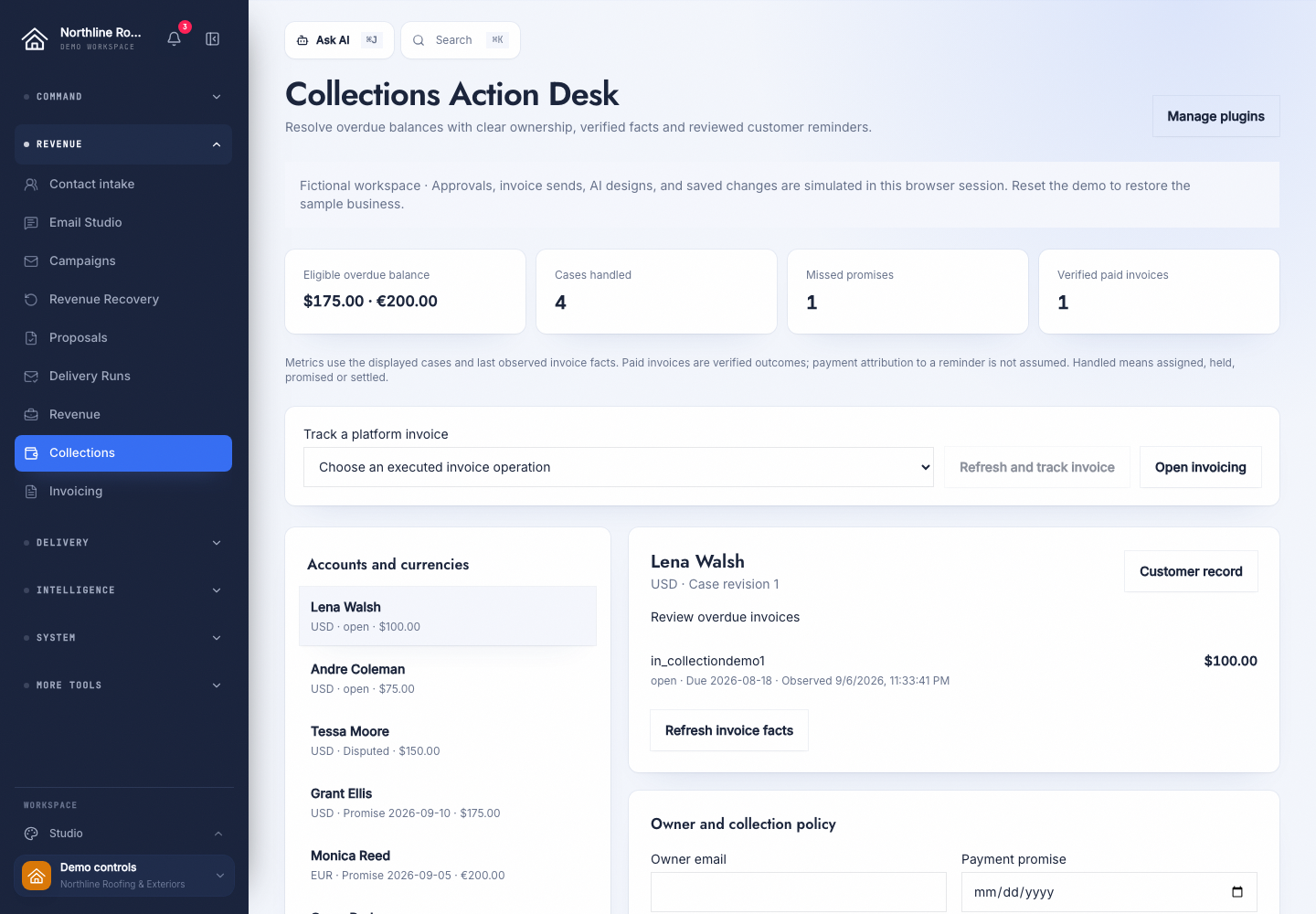
Inspect. Check the recorded invoice balance, observation time and latest customer message together.
Decide. Record the promised payment date or dispute and use the case’s hold or snooze controls when appropriate.
Check. After an approved reminder, inspect the send result. Close the collection only when payment evidence supports it.
Complete the workflow
-
Open Collections and choose the customer-linked case. Read the invoice evidence, observation time and balance before preparing any action.
-
Review the customer’s conversation history and any payment promise, dispute or hold on the case.
-
Record the appropriate decision in the case: preserve a hold or promise when it applies, or prepare a reminder when follow-up is appropriate.
-
Review the recipient, amount, wording and exact reminder proposal. Submit it through the existing approval process.
-
Inspect the case history and execution receipt. Confirm the provider result before recording the message as sent, and use new invoice evidence to determine whether the balance changed.
Check the result
A reviewed collection decision with a case history and a checkable action result. The customer decision and any reminder stay attached to the collection case; new payment evidence determines whether the balance is resolved.
Adapt it for your business
Connect another accounting provider through an adapter before describing its balances as live data.
For a coded variation, use Build an extension and include this example’s decision, owner and completion check in your development brief. Keep customer identity and task history in the shared services.
What to check
If invoice evidence is missing or stale, repair the configured source and inspect the new observation. If a send is uncertain, check its existing receipt before retrying. Keep disputes and holds visible so the team can resolve them before continuing reminders.
Plugins must be enabled for their operations to run. Hosted infrastructure and connected providers may have costs; AI conversations use your configured model. Keep each human decision required by the action’s policy, and verify the result in the source screen before relying on it.