Run your business · Workflow recipes
Workflow recipes
Review new customer inquiries and follow-up
Connect a software evaluation inquiry to an owner, use case and next product discussion.
Updated September 19, 2026 3 min read
A small team is handling customer conversations alongside product work. Give each new inquiry a visible owner and next action so a promising conversation can continue.
What you combine
Before you start
Use an authorized workspace with Form builder and Pipeline follow-up enabled in Plugins. Both start disabled. Choose who will review responses and own the resulting opportunities. A connected mailbox is needed only when you send a reply.
Explore the fictional workspaces to see the shared interface. There is no dedicated demo for this industry; the example adapts existing capabilities rather than claiming a preconfigured industry product.
Work through this example
A fictional software buyer requests a demonstration and names a reporting requirement that may affect the purchase.
Capture. Name, email, company, intended use and the question they want the demonstration to answer.
Decide. Assign an owner to check whether the requirement is supported and record the evidence or open question.
Hand off. Prepare the next conversation around that requirement and keep its follow-up date on the opportunity.
Complete the workflow
-
Include a name and usable email address so the reviewed response can be linked to a customer. Open Forms and create a draft called Product inquiry. Include contact email, company, use case and preferred next step.
-
Preview the form, save it and publish its share link. Submit one fictional example through that link before using it with customers.
-
Open Responses, review the example and accept the appropriate response into the pipeline. Check the matched contact instead of creating a second record for the same person.
-
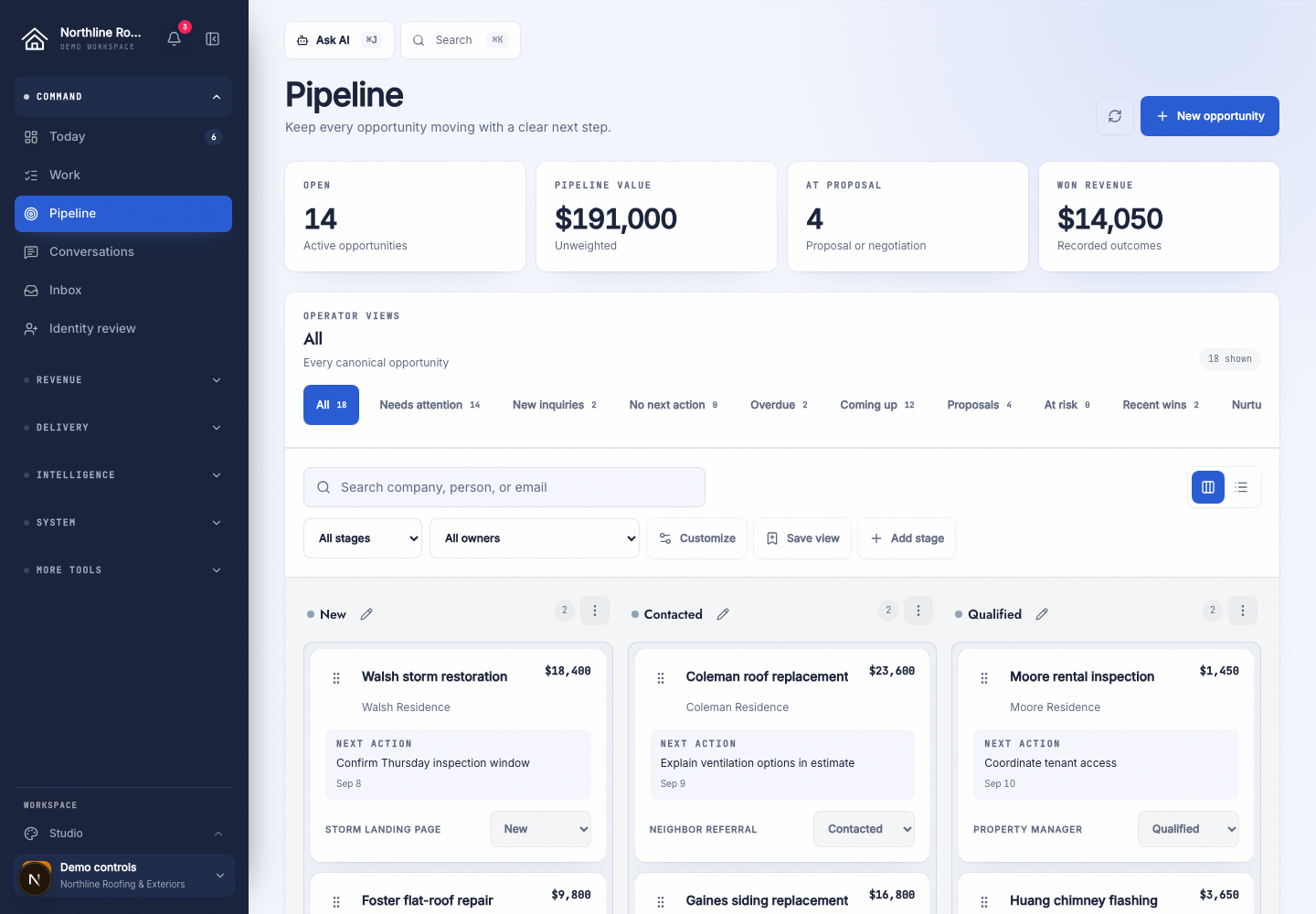
Open the resulting opportunity in Pipeline. Record an owner and the next action: Assign the next product conversation.
-
Enable and run Pipeline follow-up from Plugins. Use its findings to review stale opportunities or overdue next actions, then update the source record. The report itself does not send a message.
Check the result
The accepted response is represented in the pipeline with the correct customer context and a recorded next action. The follow-up report gives the owner a reason to inspect a record when its update or next action becomes overdue.
Adapt it for your business
Add product-usage events through a verified integration before using them to prioritize accounts.
For a coded variation, use Build an extension and include this example’s decision, owner and completion check in your development brief. Keep customer identity and task history in the shared services.
What to check
If a response cannot be accepted, check for a usable email address and whether it was already reviewed. If the report is empty, inspect its coverage and the opportunity dates. To send a reply, open the conversation and verify the sender connection and recorded send result.
Plugins must be enabled for their operations to run. Hosted infrastructure and connected providers may have costs; AI conversations use your configured model. Keep each human decision required by the action’s policy, and verify the result in the source screen before relying on it.