Run your business · Workflow recipes
Workflow recipes
Review a general appointment inquiry
Route an administrative practice inquiry to the right coordinator with a clear follow-up.
Updated September 19, 2026 3 min read
A person asks how to arrange an appointment. Collect only general contact and scheduling preferences so the administrative team can route the request through the practice’s approved process.
What you combine
Before you start
Use an authorized workspace with Form builder and Pipeline follow-up enabled in Plugins. Both start disabled. Choose who will review responses and own the resulting opportunities. A connected mailbox is needed only when you send a reply.
Explore the fictional workspaces to see the shared interface. There is no dedicated demo for this industry; the example adapts existing capabilities rather than claiming a preconfigured industry product.
Work through this example
A fictional caller wants to know whether a practice location is accepting appointment requests. The coordinator needs contact details and an administrative next step.
Capture. Name, email, preferred location and callback availability using approved administrative intake fields.
Decide. Have the coordinator check availability in the practice’s scheduling system and record the next contact.
Hand off. Keep clinical details in the practice’s approved patient system; assign only the administrative follow-up here.
Complete the workflow
-
Include a name and usable email address so the reviewed response can be linked to a customer. Open Forms and create a draft called General appointment inquiry. Include contact email, preferred callback time and general scheduling preference; exclude symptoms and clinical details.
-
Preview the form, save it and publish its share link. Submit one fictional example through that link before using it with customers.
-
Open Responses, review the example and accept the appropriate response into the pipeline. Check the matched contact instead of creating a second record for the same person.
-
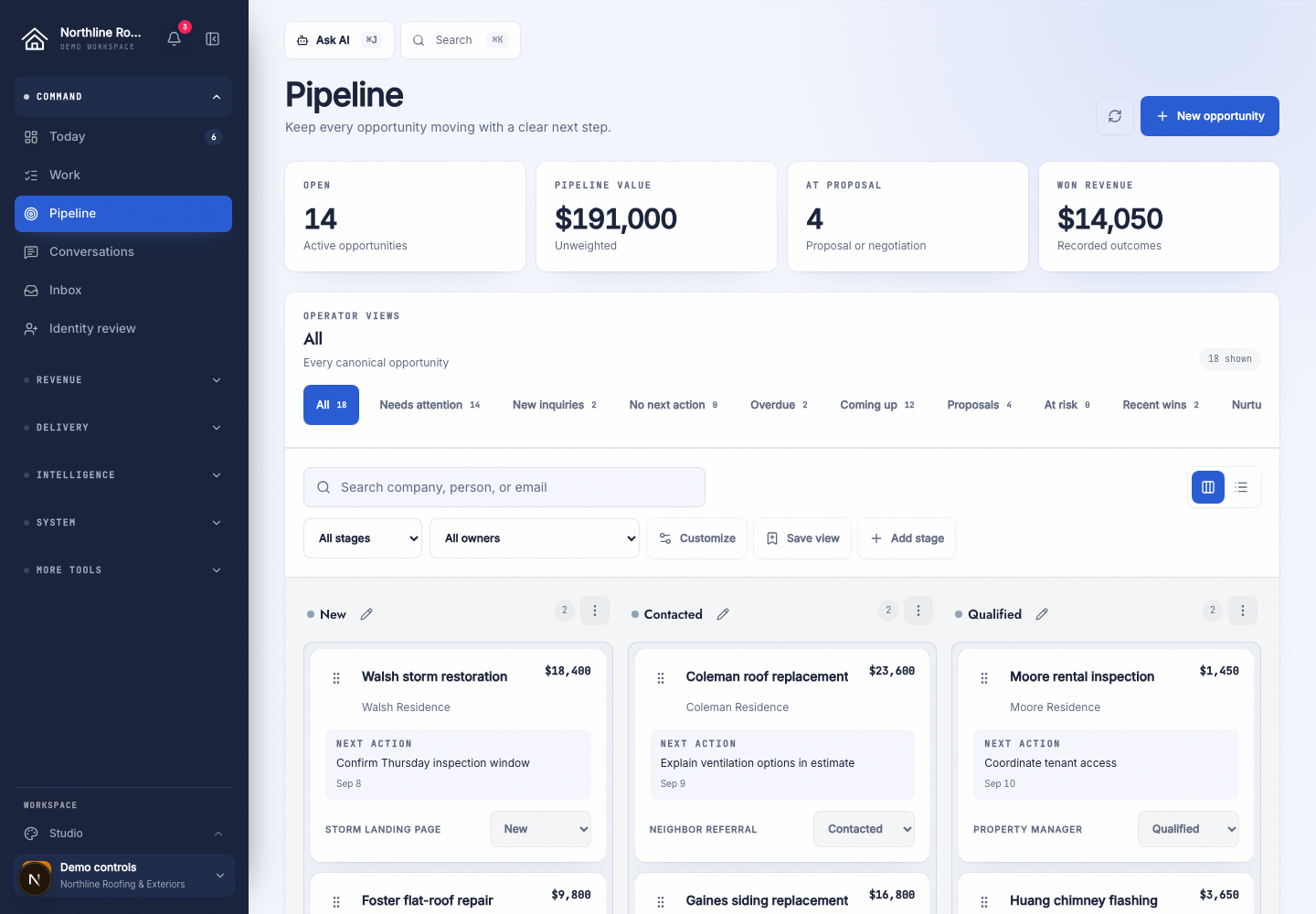
Open the resulting opportunity in Pipeline. Record an owner and the next action: Assign an administrative callback.
-
Enable and run Pipeline follow-up from Plugins. Use its findings to review stale opportunities or overdue next actions, then update the source record. The report itself does not send a message.
Check the result
The accepted response is represented in the pipeline with the correct customer context and a recorded next action. The follow-up report gives the owner a reason to inspect a record when its update or next action becomes overdue.
Adapt it for your business
Clinical records and regulated workflows need a separately assessed and implemented integration; keep this example limited to fictional, nonclinical administration.
For a coded variation, use Build an extension and include this example’s decision, owner and completion check in your development brief. Keep customer identity and task history in the shared services.
What to check
If a response cannot be accepted, check for a usable email address and whether it was already reviewed. If the report is empty, inspect its coverage and the opportunity dates. To send a reply, open the conversation and verify the sender connection and recorded send result.
Plugins must be enabled for their operations to run. Hosted infrastructure and connected providers may have costs; AI conversations use your configured model. Keep each human decision required by the action’s policy, and verify the result in the source screen before relying on it.